
Understanding this equation is crucial for anyone involved in finance or accounting, as it provides insights into a company’s financial health. The three key components of the what is the accounting equation? accounting equation are assets, liabilities, and equity, each playing a vital role in the overall financial structure of a business. Recording accounting transactions with the accounting equation means that you use debits and credits to record every transaction, which is known as double-entry bookkeeping. To calculate return on assets, divide net income by average total assets, then multiply by 100 to express as a percentage. For example, if a company has net income of $10 million and average total assets of $50 million, the ROA equals 20% ($10M / $50M × 100). This means the company generates $0.20 in profit for every dollar of assets.
- This account includes the total amount of long-term debt (excluding the current portion, if that account is present under current liabilities).
- Includes non-AP obligations that are due within one year’s time or within one operating cycle for the company (whichever is longest).
- A manufacturing company’s 6% ROA should be evaluated against other manufacturers, not against software companies achieving 25% ROAs.
- This allocation does not impact the overall size of the company’s balance sheet, but it does decrease the value of stocks per share.
Video Explanation of Return on Equity
It simplifies complex calculations and ensures that clients understand both the process and the result by providing accurate, step-by-step answers. This transaction affects only the assets of the equation; therefore there is no corresponding effect in liabilities or shareholder’s equity https://mokhbernews.ir/bookkeeping-services-near-miami-fl-better-business/ on the right side of the equation. For example, if a company becomes bankrupt, its assets are sold and these funds are used to settle its debts first. Only after debts are settled are shareholders entitled to any of the company’s assets to attempt to recover their investment. Calculating the changes in non-cash net working capital is typically the most complicated step in deriving the FCF Formula, especially if the company has a complex balance sheet.

Mastering the Language of Business: A Comprehensive Guide to Accounting & Financial Statements.
- Take the time to apply this knowledge in your financial assessments and decision-making processes; it will serve you well in understanding the dynamics of any business you encounter.
- It also supports deeper analysis when used together with the income statement and cash flow statement.
- Factors such as an increase or decrease in net income and incurrence of net loss will pave the way to either business profitability or deficit.
- When the inventory is purchased, the total value of the company’s assets increases by the cost of the goods acquired.
- Below are some examples of transactions and how they affect the accounting equation.
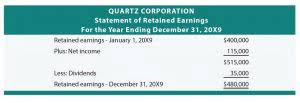
- Retained earnings represent a useful link between the income statement and the balance sheet, as they are recorded under shareholders’ equity, which connects the two statements.
It automates double-entry bookkeeping, applies the accounting equation in real time, and gives you confidence that your numbers add up. Because of this reliability, auditors and investors rely on the accounting equation to ensure the numbers make sense and that financial reports reflect the true state of the business. When an owner invests personal money into the business, cash increases as an asset, and the owner’s equity also increases by the same amount.
Real-World Illustration of Accounting Equation
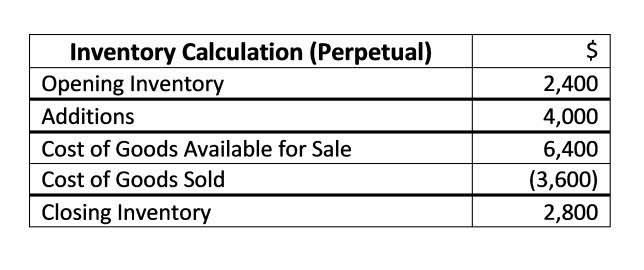
Asset-intensive businesses like utilities and manufacturing typically show ROAs below 5%. Companies in the 5-10% range demonstrate average performance, while 10-20% indicates strong efficiency. ROAs above 20% are excellent, commonly seen in asset-light businesses like software and consulting. Always compare ROA against industry peers rather than across different sectors.
Video Example of Return on Assets in Financial Analysis
Equations are the fundamental elements of mathematics, and they are employed in a variety of real-world applications, including engineering, physics, and personal finance. Professionals, educators, and students all benefit from learning equation-solving strategies. However, solving equations by hand may sometimes be challenging and time-consuming. To really understand the accounting equation, it helps to look at each component on its own. You can think Cash Flow Statement of them as resources that a business controls due to past transactions or events. Regardless of how the accounting equation is represented, it is important to remember that the equation must always balance.
Help us make our solutions better
These examples clearly illustrate how the accounting equation operates in various situations, helping you grasp the importance of maintaining balance in financial records. Understanding how this equation functions is crucial for effective financial management and reporting. By ensuring that all transactions adhere to this framework, you can maintain accurate financial statements and reports.
Recap: Return on Assets and ROA Formula

This equation sets the foundation of double-entry accounting, also known as double-entry bookkeeping, and highlights the structure of the balance sheet. Double-entry accounting is a system where every transaction affects at least two accounts. Knowing a company’s free cash flow enables management to decide on future ventures that would improve shareholder value. Additionally, having positive free cash flow indicates that a company is capable of paying its debts. Conversely, negative free cash flow suggests a company may need to raise money.